• Home
  • Suggest A DIY
  • DIY Newsletter

Recycled Crafts

Creative DIY Projects That Turn Trash Into Treasure

  • About CraftGossip
  • Our Network
    • Bath & Body Crafts
    • Candle Making Ideas
    • Crochet Ideas
    • Cross Stitch
    • Edible Crafts
    • Felting Patterns
    • Glass Art
    • Home & Garden Ideas
    • Indie Crafts
    • Jewelry Making
    • Kids Crafts
    • Knitting Patterns
    • Lesson Plans
    • Needlework
    • Party Ideas
    • Polymer Clay
    • Quilting Ideas
    • Recycled Crafts
    • Scrapbooking
    • Sewing Patterns
    • Card Making
    • DIY Weddings
    • Not Craft Ideas
  • Giveaways
  • Roundups
  • Store
  • Search

St. Patrick’s Day Blarney Stone from…a stone!

March 8, 2010 by Stefanie Girard

OK this may be obvious but all you need to do is grab a rock and paint it using the fun tutorial found over at Kaboose. Now “recycling” a rock is well, I suppose a bit of a stretch here but after St. Patrick’s Day is over you can “recycle” the rock back to your garden or wherever you got it from. See the twist here?

[tags]how to make a blarney stone[/tags]
«
»

Have you read?

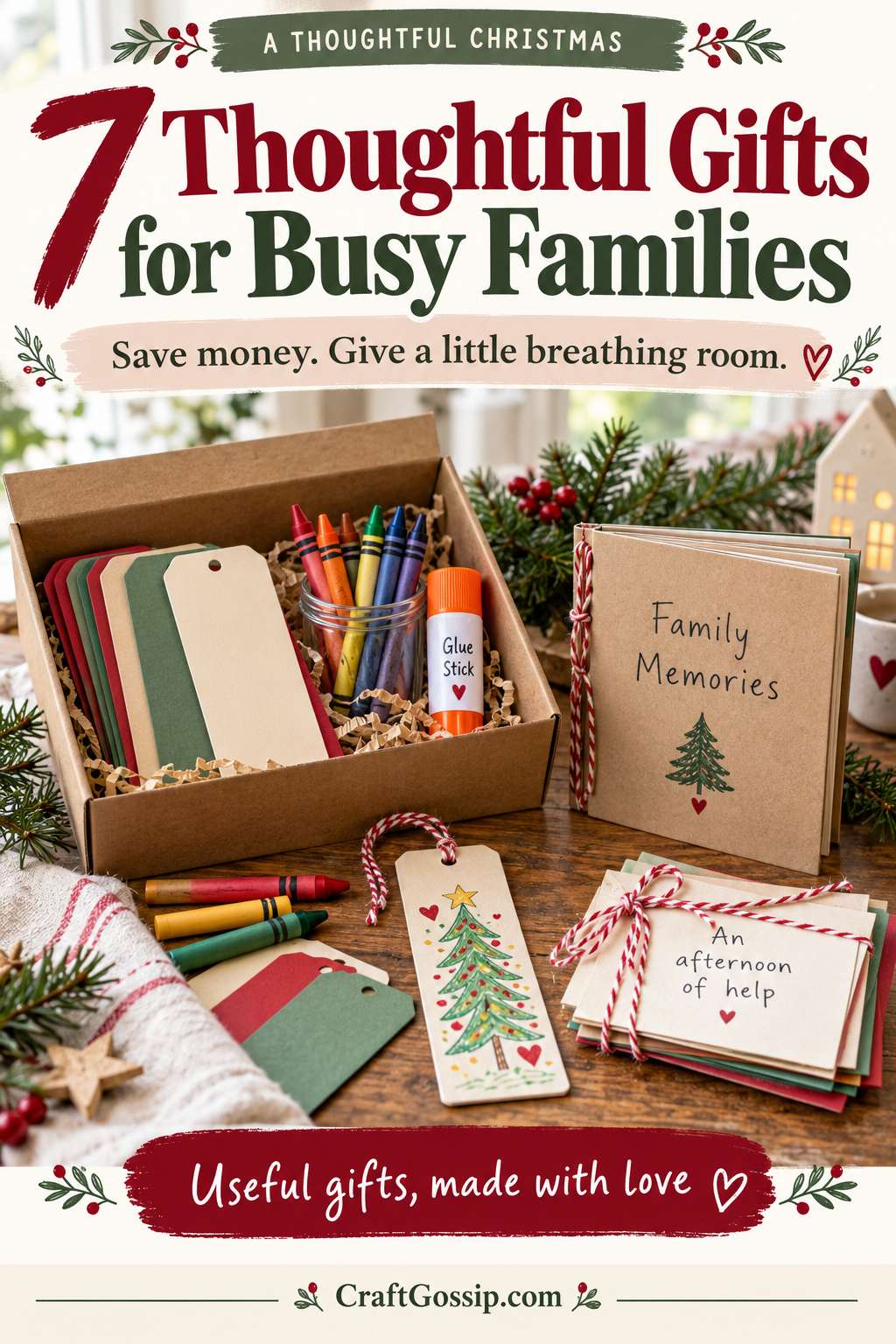
Meaningful Handmade Christmas Gifts You Can Make from What You Already Have

There is a moment in almost every handmade Christmas plan when the project starts asking for more shopping.

The inexpensive ornament needs special clay. The little sewing gift needs a new zipper. The scrapbook needs a paper collection, matching stickers and, apparently, a machine you did not own yesterday.

We have all been there.

When money is tight, the most affordable handmade gifts often begin with a different question:

“What can I make well with what I already have?”

That might be a bookmark sewn from a fabric scrap, a family recipe written in your own handwriting or a tiny album made from card left over from another project.

These gifts do not need to imitate something expensive. Their value comes from being chosen and made for a particular person.

Set a spending limit before choosing the project

A useful gift budget includes the little extras.

Count thread, glue, printing, photographs, postage and packaging, as well as the main materials.

Then decide what you are comfortable spending. That may be $2, $5 or nothing beyond what is already in the cupboard.

There is no minimum amount that makes a gift acceptable.

If your supplies are limited, make a smaller project. A beautifully finished bookmark is more satisfying than a half-finished quilt you could not afford to complete.

And if this is a year when making gifts is beyond your energy or budget, a thoughtful card remains a perfectly good choice.

1. A fabric bookmark from a meaningful scrap

A bookmark is small, useful and ideal for those fabric pieces we keep because they are “too lovely to throw away.”

At last, their moment has arrived.

Choose fabric that suits the recipient: favourite colours, a garden print, a little piece of a shared sewing project or a remnant with a family connection.

Ask permission before cutting up sentimental clothing or textiles that belong to someone else.

A simple bookmark method

You will need two cotton rectangles approximately 8 cm by 20 cm, matching thread and basic sewing equipment.

  1. Place the rectangles right sides together.
  2. Sew around the edges using a 1 cm seam allowance, leaving a turning gap along one long side.
  3. Trim the corners carefully without cutting the stitches.
  4. Turn right side out and ease out the corners.
  5. Press, folding the opening edges inward.
  6. Topstitch around the bookmark to close the gap and neaten the edges.

The finished bookmark will be approximately 6 cm by 18 cm. Keep it thin so it sits comfortably inside a book.

Our easy fabric bookmark tutorial offers another approach, with optional decorative details.

Keep it affordable

Use existing thread and skip embellishments that require a separate shopping trip.

A short note explaining the fabric choice can make a simple bookmark feel deeply personal:

“This reminded me of the roses you always grew beside the back steps.”

2. A handwritten family recipe collection

A familiar family recipe can hold more meaning than a bought gift.

Choose three to five recipes the recipient will genuinely use. They might be everyday favourites, festive baking or dishes connected with someone special.

Copy them clearly onto card or folded paper. Include useful details such as oven temperature, tin size, ingredient quantities and serving yield where known.

Add the knowledge that usually lives in somebody’s head

Family recipes often leave out important steps because the original cook knew them by heart.

Explain what “a moderate oven” means for the recipe, what size spoon or cup was used and how to recognise when the dish is cooked.

If you cannot confirm a detail, say so rather than guessing.

Add a short memory beside each recipe. A sentence about Sunday lunches or the biscuit tin after school gives the collection a voice.

For someone who prefers a practical consumable gift, the CraftBits gifts-in-a-jar collection offers another way to pair a recipe with something they can use. Just remember that a recipe card alone does not require buying jars or ingredients.

3. A small memory booklet with real stories

A handmade memory booklet does not need dozens of pages.

Choose one theme:

  • A shared holiday.
  • A favourite family home.
  • Things you learned from a parent.
  • Funny sayings from the grandchildren.
  • A friendship through the years.

Fold several sheets of paper inside a slightly sturdier cover. For a simple no-stitch version, punch two holes near the fold and tie the pages loosely with ribbon or cord.

Use copies of photographs rather than cutting original family pictures.

Let the words do some of the work

Write names, places and dates where you know them.

Include details that photographs cannot show: who made the picnic, what everyone laughed about or why a particular place mattered.

If printing photographs is outside your budget, make the booklet about written memories. A few thoughtful paragraphs can be a lovely gift on their own.

Avoid filling every space with decoration. Clear writing, a restrained colour scheme and room around the photographs often look better than a page crowded with embellishments.

Make it comfortable to read

Use dark writing on a light background and lettering large enough for the recipient.

Tiny handwriting on patterned paper might look decorative, but it can make a personal gift frustrating to enjoy.

4. A set of handmade gift tags for someone who loves giving

Gift tags are useful consumables for the person who always wraps presents beautifully.

Make a small coordinated set from card scraps, suitable sections of old greeting cards or leftover scrapbook paper.

Check recycled card carefully for personal messages and remove any identifying details.

How to make a tidy set

  1. Choose two or three coordinating colours.
  2. Cut the tags to a consistent size using a template.
  3. Round or angle the corners if desired.
  4. Leave a clear area for writing.
  5. Punch a hole and add short lengths of existing ribbon or string.
  6. Package the set in a handmade paper sleeve.

Make some suitable for birthdays and thank-you gifts, rather than decorating every tag for Christmas.

A dozen useful tags can be more welcome than a larger set that only works for one week of the year.

Use the supplies you have

You do not need a cutting machine, metal dies or new stamps.

A ruler, scissors and careful colour choices are enough. If you have no ribbon, give the tags without ties so the recipient can use their preferred wrapping supplies.

The gift should make your stash smaller, not start a new collection.

5. A personal letter to keep

This may be the least expensive gift in the series, and it can be one of the most meaningful.

Write a letter telling someone what you appreciate about them.

Choose specific memories rather than a list of general compliments.

You might describe:

  • A kindness they showed when you needed it.
  • Something they taught you.
  • A family tradition you associate with them.
  • A quality you admire.
  • A moment you still remember fondly.

Keep it natural

Write as you would speak to the person.

You do not need grand language or a dramatic life story. A few honest paragraphs will usually mean more than something polished until it sounds like a greeting card.

If handwriting is difficult, type it in a readable font and sign it.

A plain envelope is enough. You are giving the words.

For children, invite them to contribute a drawing or finish a sentence such as, “My favourite thing we do together is…”

Let their own words remain their own, even if the spelling is wonderfully creative.

6. A ribbon bookmark made from the leftovers tin

If you already have ribbon and suitable beads, you may have the makings of several small gifts.

The CraftBits bead-and-ribbon bookmark is a straightforward project to explore.

Choose ribbon that lies flat and beads with holes large enough for it. Keep any bulky details at the ends, outside the closed pages.

Personalise with restraint

Use a favourite colour or a bead connected with the recipient’s interests.

Test the finished bookmark in a book before wrapping it. Check that the ribbon fits comfortably, the knots hold and the materials do not transfer colour onto paper.

Avoid fragile or sharp embellishments.

These are gifts for older children or adults, with small components kept away from young children.

If you need to buy every material, compare the total cost with a simple card or fabric bookmark first. “Small project” and “small spend” are not always the same thing.

7. A handmade repair-and-care gift

For someone who appreciates practical presents, offer to repair a small item they already love.

This could be sewing on buttons, fixing an accessible seam or patching a small area using a skill you already have.

Ask before making changes, especially if the item is valuable or sentimental.

A visible patch might delight one person and disappoint another.

Make the gift specific

Offer something manageable:

“I would love to replace the missing buttons on your favourite cardigan. If you would like that, we can choose from the buttons I already have.”

You could present the offer in a handmade card with a small stitched motif.

Avoid promising repairs beyond your experience. Some fabrics, linings and structural damage need specialist attention.

Why this can feel so personal

Repairing a favourite item shows that you noticed what the person values.

It also helps them keep using something they enjoy, without introducing another possession to store.

That is a lovely form of handmade giving.

Make one sample before starting a batch

Before cutting ten bookmarks or assembling six albums, finish one.

Check how long it takes, whether you enjoy making it and whether the result is useful.

Lay out the remaining materials and calculate how many gifts you can actually finish.

Batch the repetitive jobs, such as cutting and folding, but keep the personal details individual.

A little planning helps prevent Christmas Eve from becoming a tense negotiation between you, the glue stick and a project that looked much quicker online.

Wrap small gifts without undoing the savings

Use clean paper, an existing envelope or a suitable piece of fabric.

A bookmark can sit inside a folded card. Gift tags can go into a paper sleeve. A memory booklet can be tied with ribbon you already own.

There is no need to buy a box to make a small gift look larger.

Add the recipient’s name and one sentence about why you made it for them. That sentence often does more than another layer of packaging.

A handmade gift does not need a price-tag explanation

You do not owe anyone an account of your budget.

Give the gift with a warm, simple message:

“I made this because it reminded me of you.”

“I wanted you to have these memories written down.”

“I thought you would enjoy using this.”

When money is stretched, it is easy to feel that a present needs to prove something. It does not.

A useful little object, a shared memory or a few carefully chosen words can say exactly what you wanted Christmas giving to say in the first place.

Explore

books Christmas CraftGossip Giveaways Craft Inspirations Easter glass halloween Home Decor kid crafts More Crafts Patterns & Tutorials Recycled and Thrifted Ideas recycled art Recycled Clothing Recycled Jewelry Recycled kids crafts Recycled Sewing Recycling Ideas Recycling Organizing tin can

Featured Posts

DIY Sea Glass Planter: A Coastal Terracotta Pot Makeover

DIY Wedding Dresses

How to make a recycled canning jar lid pumpkin

How to make a recycled dress tot (or pet) teepee

New craft material alert!

RSS feed: More Articles More Articles

  • Poppy Crafts for Remembrance Day
  • FREE Layered “Enter if You Dare” Halloween Die Cut
  • 6 Dairy-Free Keto Dinner Recipes Without Cheese or Dairy Cream
  • DIY Farmhouse Christmas Bells Review – An Easy Rustic Ornament You Can Make on a Budget
  • DIY Simmer Pot Gifts: 4 Beautiful Blends from Budget to Luxury, Plus Printable Tags
  • Meaningful Handmade Christmas Gifts You Can Make from What You Already Have
  • Designer Spotlight: Living on the Rainbow
  • The Bunny Sweater Knitting Pattern that’s Actually for Cats
  • AITA for Saying No to Christmas Orders Because I Want to Enjoy the Holidays?
  • Book Review: Twenty to Stitch Christmas Cross Stitch by Michael Powell

Copyright © 2026 · CraftGossip | Start Here | Contact Us | Link to Us | Your Editors | Privacy and affiliate policy